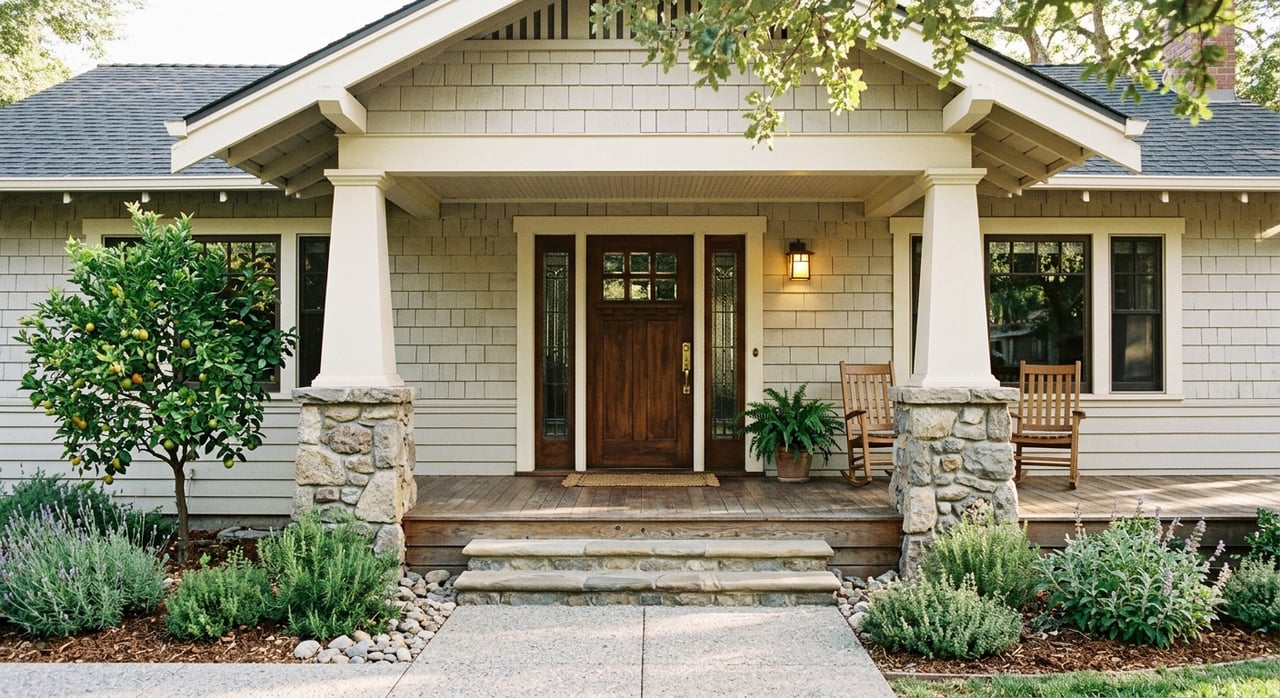
If you are drawn to neighborhoods with real architectural character, Whittier stands out for a simple reason: its historic appeal is not limited to one street or a handful of landmark homes. Across the city, officially designated districts, preserved landmarks, and older residential areas create a layered sense of place that many buyers find hard to replicate. If you are considering a home here, understanding where that character comes from can help you buy with more confidence. Let’s dive in.
Why historic Whittier stands out
Whittier’s historic identity is backed by more than charm alone. The city recognizes four locally designated historic districts, more than 100 locally designated historic landmarks, plus additional properties on the California and National Registers. According to the City of Whittier’s historic preservation program, the city also provides formal guidance for district review, landmark designation, exterior work, and Mills Act contracts.
That structure matters if you are shopping for an older home. It means Whittier’s historic neighborhoods are not just visually distinctive. They are part of a broader preservation framework that helps explain why certain blocks retain such a consistent look and feel over time.
Whittier’s key historic districts
Hadley-Greenleaf Historic District
The Hadley-Greenleaf Historic District is one of Whittier’s signature historic areas. Designated in 1990, it includes more than 190 individual properties and is generally bounded by Greenleaf Avenue, Broadway Street, Hadley Street, and Painter Avenue.
For buyers, this district represents a strong concentration of historic housing near the city’s traditional core. Its location also ties closely to the story of old Whittier, since the city notes that the original town center was at Greenleaf Avenue and Hadley Street, as described on its points of interest page.
Central Park Historic District
The Central Park Historic District, also designated in 1990, includes 45 properties. It surrounds Central Park and extends into nearby blocks on Washington, Friends, Hadley, Bailey, and Painter.
This district appeals to buyers who want a historic setting connected to one of the city’s established public spaces. The area’s placement around the park helps create a classic neighborhood pattern, where historic homes and civic spaces feel linked rather than separate.
College Hills Historic District
The College Hills Historic District was designated in 2002 and contains 97 properties. The city identifies it as Whittier’s first planned hillside development, originally subdivided in 1923, with homes along Worsham Drive, Hillside Lane, Philadelphia Street, Ridge Road, and the east side of Bailey Street.
If you are looking for historic character in a hillside setting, College Hills is especially notable. Its planned development history gives it a distinct identity within Whittier’s older housing stock, and that can make it attractive to buyers who value both neighborhood continuity and topographic variety.
Earlham Historic District
The Earlham Historic District is the smallest of the four locally designated districts, with seven properties. Designated in 2011, it is described by the city as an early Whittier College neighborhood dating from 1903 to 1940, with many homes associated with college administrators and faculty.
Although smaller in scale, Earlham adds another layer to Whittier’s historic fabric. It shows how the city’s older neighborhoods developed not only around commerce and transportation, but also around long-standing local institutions.
Uptown Whittier adds context
While Uptown Whittier is not a residential historic district, it helps explain the appeal of nearby neighborhoods. The city describes Uptown as Whittier’s historic central business district and highlights its tree-lined, pedestrian-oriented setting. The Greenleaf Promenade improvements have emphasized green space, tree replacement, lighting, outdoor dining, and walkability.
For homebuyers, that nearby context matters. A historic home often feels more compelling when it sits near a traditional downtown area that still reflects the city’s earlier pattern of development.
Architectural styles that shape Whittier
Part of Whittier’s enduring appeal comes from the variety of residential styles found across its older neighborhoods. The city’s residential style guide identifies the most common pre-1950 styles as:
- Victorian
- Transitional/Four-square
- Craftsman
- Mission Revival
- Spanish Colonial Revival
- Tudor Revival
- Colonial Revival
- Minimal Traditional
The city also points buyers and owners toward key character-defining features such as roof forms, windows, doors, siding, and building materials. In practical terms, those details often shape both a home’s visual appeal and the scope of future exterior changes.
Landmarks that reinforce place
Historic neighborhoods tend to feel stronger when they are part of a broader local story. In Whittier, several notable landmarks help reinforce that story and connect residential areas to the city’s development over time.
The City of Whittier’s points of interest page highlights the Jonathan Bailey House, built in 1868-1869, as the city’s oldest building. It also notes the Whittier Historic Depot, completed in 1892, as one of only four remaining railroad stations from the 1890s in California.
The same city resource identifies the Paradox Hybrid Walnut Tree as both a National Landmark and State Historical Landmark 681, while Pio Pico State Historic Park is listed as State Historical Landmark 127. Together, these places help explain why Whittier can feel historically layered instead of preserved in isolated pockets.
The city also reports that Whittier has over 100 locally designated historic landmarks, along with 24 landmarks on the California Register and seven on the National Register. Representative listed places include the Jonathan Bailey House, the Jordan House, the Hoover Hotel, the Southern Pacific Railroad Depot, the First National Bank/Bank of America Building, and Pio Pico Casa.
What buyers should know before purchasing
Historic appeal can be a major advantage, but it comes with responsibilities. In Whittier, the city’s historic resources ordinance applies to all vintage properties developed prior to 1941, all eligible and designated historic landmarks, and all properties within historic districts, according to the city’s Certificate of Appropriateness overview.
That is an important point if you are comparing older homes. A property may face review requirements even if it is not individually designated as a landmark.
Exterior work often triggers review
The city states that no permit may be issued for work on a historic resource or vintage building until a Certificate of Appropriateness has been approved. Interior-only work is generally not reviewed unless it changes the exterior, based on the same city guidance for historic review.
For many buyers, that means the most important due diligence question is not simply whether a home is old. It is whether the property is in a district, designated locally or otherwise recognized, and what that status means for future plans.
Preservation rules are not the same as a freeze
Some buyers assume historic designation means you cannot update or repair a property. Whittier’s guidance is more balanced than that. The city explains that for designated landmarks, additions and repairs are allowed, and the rules are intended to protect character-defining features, favor repair when possible, and allow replacement when deterioration is beyond repair, as noted in the city’s landmark designation guidance.
The practical takeaway is that preservation oversight is real, but it is not necessarily inflexible. The city encourages owners to contact the Community Development Department before starting plans or work, which is smart advice for any buyer thinking ahead.
Demolition and major alterations can involve deeper review
If your plans include a major remodel, substantial alteration, or demolition, the review process can become more involved. The city says that for non-listed buildings at least 50 years old, or 45 years old in some CEQA-related cases, a historic resource evaluation by an independent consultant may be required. Demolition of an eligible or designated landmark can require Historic Resources Commission approval and an Environmental Impact Report, according to the city’s demolition review information.
That does not make these properties a poor fit. It simply means buyers should understand the review path before they close, especially if the purchase decision depends on future changes.
Tax incentives can be meaningful
For the right property, preservation incentives can add financial value to historic ownership. Whittier has offered Mills Act contracts since 2001, and the city says qualified historic properties may enter this voluntary program if they are listed locally, statewide, or nationally, or if they are contributing resources within a designated historic district.
The state Office of Historic Preservation, as summarized by the city, explains that Mills Act contracts have a minimum 10-year term, renew automatically each year, transfer to new owners, and include continuing maintenance and inspection obligations. In other words, this is not simply a tax break tied to age. It is a preservation agreement tied to long-term stewardship.
Buyers should also know that not every tax program applies to owner-occupied homes. The National Park Service eligibility rules state that the federal 20% historic preservation tax credit is generally for income-producing properties, and owner-occupied residential properties do not qualify.
For some residential projects, California’s State Historic Rehabilitation Tax Credit may be relevant, but the rules are narrower. The same National Park Service source notes that the home must be in the California Register or contribute to a registered historic district, qualified rehabilitation expenses must exceed $25,000, the taxpayer’s modified adjusted gross income must be $200,000 or less, and the owner must occupy the residence within two years after rehabilitation.
How to evaluate a historic home in Whittier
If you are serious about buying in one of Whittier’s older neighborhoods, a clear review process can save time and reduce surprises.
Consider focusing on these questions early:
- Is the home within one of Whittier’s designated historic districts?
- Is it a locally designated landmark, California Register property, National Register property, or a contributing resource?
- Was the property developed prior to 1941 and therefore potentially covered by the city’s vintage-property rules?
- Are there any planned exterior changes that may require a Certificate of Appropriateness?
- Does the property appear eligible for a Mills Act contract or other preservation-related incentive?
Because local, state, and federal lists are separate, the exact designation should be verified before you make assumptions about review requirements or incentive eligibility. That distinction is one of the most important details for buyers weighing both lifestyle and long-term ownership costs.
Why these neighborhoods keep their appeal
Historic Whittier neighborhoods continue to attract buyers because they offer more than age alone. They combine architectural variety, recognizable district boundaries, established landmarks, and a city framework that supports preservation over time.
For you as a buyer, that can translate into a stronger sense of continuity and a home with lasting identity. If you want guidance on evaluating historic homes, district nuances, and discreet opportunities in Whittier and across Southern California, connect with Charlotte Kornik for a private consultation and exclusive access.
FAQs
What are the official historic districts in Whittier?
- Whittier has four locally designated historic districts: Hadley-Greenleaf, Central Park, College Hills, and Earlham.
What should buyers know about historic-home rules in Whittier?
- Buyers should know that Whittier’s historic resources ordinance applies to vintage properties developed prior to 1941, designated landmarks, eligible resources, and properties within historic districts, so review requirements may apply even when a home is not individually landmarked.
What types of historic homes are common in Whittier?
- According to the city’s style guide, common pre-1950 residential styles in Whittier include Victorian, Transitional/Four-square, Craftsman, Mission Revival, Spanish Colonial Revival, Tudor Revival, Colonial Revival, and Minimal Traditional.
Can you remodel a historic home in Whittier?
- Yes, additions and repairs are allowed, but exterior work on historic resources or vintage buildings typically requires a Certificate of Appropriateness before permits are issued.
Are there tax incentives for historic homes in Whittier?
- Some properties may qualify for a Mills Act contract or limited rehabilitation-related incentives, but eligibility depends on the home’s exact designation, intended use, and program requirements.
Does Uptown Whittier count as a historic residential district?
- No, Uptown Whittier is not a residential historic district, but it remains an important part of the city’s historic central business district and adds context to the appeal of nearby neighborhoods.