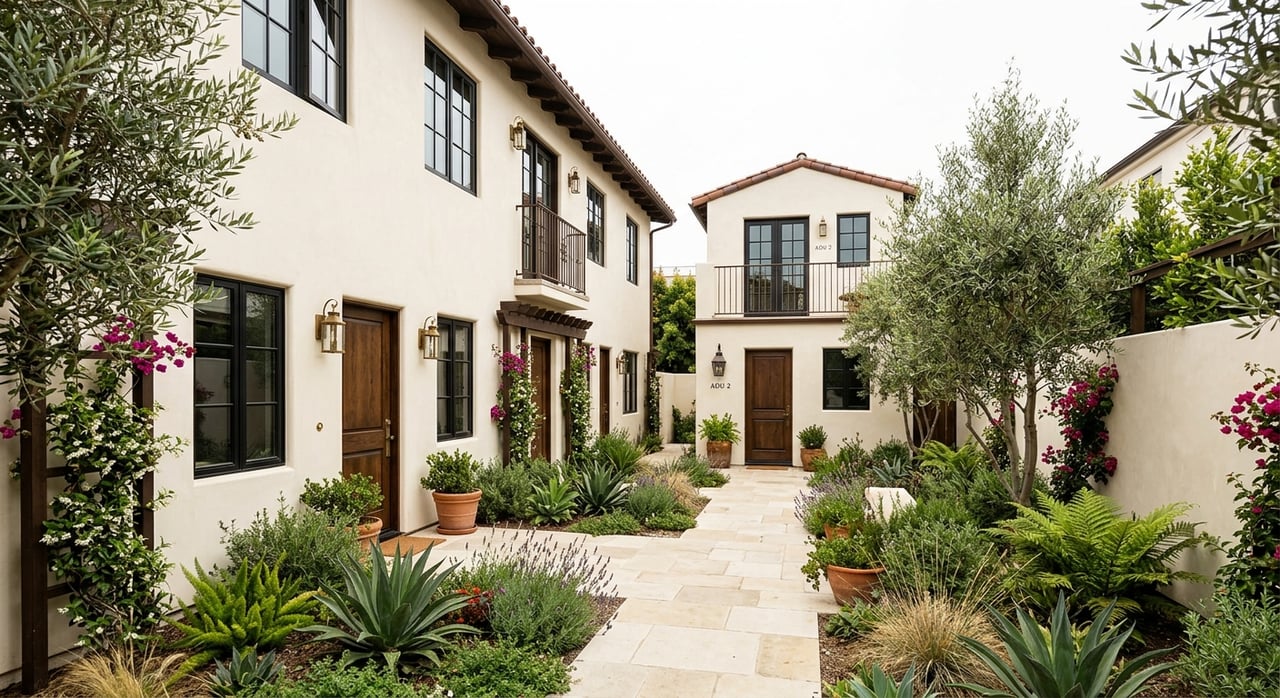
If you are looking for a Southern California investment market with real rental demand and multiple ways to add value, Long Beach deserves a close look. It combines a renter-heavy population, older multifamily inventory, and a city policy environment that supports added housing supply through options like ADUs and small-scale infill. For investors who want a more strategic play than simple yield chasing, Long Beach offers a mix of current income, selective upside, and long-term positioning. Let’s dive in.
Why Long Beach stands out
Long Beach has the kind of housing profile that naturally supports rental demand. The city says 60% of residents rent, and Census QuickFacts shows an owner-occupied housing rate of 41.2% with median gross rent at $1,871. That renter concentration matters because it helps support demand for both traditional apartments and thoughtfully added units.
The city is also planning for more housing production. Its Sixth Cycle Housing Element calls for 26,502 new units by 2029, with nearly 60% identified as affordable, and Long Beach has stated that it is rezoning to support housing types like ADUs, duplexes, and bungalows near jobs and high-quality public transportation. For investors, that points to a local policy direction that is focused on expanding housing capacity rather than limiting it.
Long Beach also benefits from a diversified economic base. The local economy includes health care, transportation and warehousing, accommodation and food services, education, aerospace, manufacturing, and professional services, with major local infrastructure that includes CSU Long Beach, Long Beach City College, Long Beach Transit, and Long Beach Airport. A broad employment base can help support steady housing demand across different renter segments.
Multifamily demand looks durable
Multifamily fundamentals in Long Beach have remained relatively tight. The city’s 2025 Westside economic and market study reported a 4.1% multifamily vacancy rate and average asking rent of $1,775 in Q2 2023. That kind of vacancy level suggests a market where well-located units can continue to find renters without long periods of downtime.
On a broader regional basis, Northmarq’s Q4 2025 South Bay report showed a 4.5% vacancy rate and average asking rents of $2,321 per month in the wider South Bay. While Long Beach should always be underwritten as its own market, the regional context supports the idea that coastal infill rental demand remains competitive.
This does not mean every deal works. It does mean Long Beach offers the kind of demand backdrop that can make small multifamily and ADU plays worth deeper analysis, especially when the basis, condition, and zoning line up.
Best property types for investors
Older small multifamily buildings
Small multifamily properties are a natural fit in Long Beach because the city’s planning framework supports housing types that add incremental density. For many investors, that creates an opening to acquire existing units with stable income today while exploring future improvements or additional unit potential.
Older apartment buildings can also offer value-add room. The city’s market study describes much of the multifamily inventory in the relevant corridor as older Class C stock with rents below the city average. In practical terms, that can create opportunities for renovation-based NOI growth if the capital plan, rent assumptions, and tenant considerations are handled carefully.
Residential lots with ADU potential
ADU-oriented properties are another compelling category. Long Beach allows ADUs and JADUs in residential zoning districts, mixed-use districts, planned development districts, and specific plans where residential use is allowed, as long as a principal residential use already exists on the lot.
That makes site selection especially important. A property may be more attractive if it has usable yard area, setback flexibility, or conversion potential that can support an added unit without requiring full redevelopment.
Existing multifamily with detached ADU capacity
One of the more interesting angles in Long Beach is the flexibility available on existing multifamily lots. According to the city’s zoning summary, owner occupancy is not required for an ADU at an MFD, and existing multifamily lots can support up to eight detached ADUs, or the number of legally permitted principal units on the lot, whichever is less.
That can materially change the long-term income story on the right parcel. If you are evaluating a multifamily asset, it is worth looking beyond current rent roll and considering whether the site may support additional detached units over time.
Why ADUs matter in Long Beach
Long Beach says it is the highest per-capita producer of ADUs in California. That does not guarantee an easy project, but it does suggest the city has meaningful experience with this housing type and that ADUs are already a familiar part of the local housing conversation.
The city also offers a pre-approved ADU program for new construction only, not conversions. For eligible lots, that can reduce some design and permitting friction and make the path more efficient than a fully custom process.
For investors, ADUs often work best as part of a conservative long-term hold strategy. In Long Beach, they should be underwritten as long-term rental units rather than short-term rental units, since the city’s short-term rental ordinance says ADUs and JADUs cannot be registered as short-term rentals.
Zoning and permitting checks to do early
Confirm parcel zoning first
Before you build a business plan around added units, verify the parcel-level zoning. Long Beach directs property owners and buyers to its zoning maps and GIS tools to confirm the zoning district for each property before planning a project.
This step matters because broad citywide policy support does not replace property-specific review. A promising address on paper can still have limitations that affect design, unit count, or timing.
Understand current ADU rules
Long Beach currently applies state ADU law directly while its local ADU ordinance is still being developed. The city also notes that its ADU guidance is updated annually to reflect state legislative changes.
That means investors should work from the current city guidance at the time they underwrite and again before they submit plans. In a market like this, details can shift enough to affect feasibility.
Watch for coastal and historic constraints
Two issues can slow a deal even when the site looks strong. In the coastal zone, Long Beach requires an administrative Local Coastal Development Permit before a building permit application is submitted. Properties in historic districts may also need a Certificate of Appropriateness.
Neither issue automatically kills a project. They do, however, affect timing and process, so they should be identified early in due diligence rather than after closing.
Expect a process, not instant approval
Long Beach says complete ADU permit applications are reviewed within 60 days, and its planning page notes that typical plan-check review time is 4 to 6 weeks depending on workload and project complexity. That is relatively streamlined compared with some markets, but it is still not immediate.
Your underwriting should leave room for normal review cycles, revisions, consultant coordination, and any added approvals tied to the site. Conservative timelines are usually better than optimistic ones.
Rent rules and underwriting realities
Long Beach can be attractive, but it is also a regulated market. The city’s just-cause guide states that many covered residential properties are subject to California’s AB 1482 rent cap of 5% plus CPI or 10%, whichever is lower. It also notes there is no vacancy control, and that no-fault terminations can trigger relocation assistance.
These rules matter when you evaluate value-add plays. If your business plan depends on rapid rent resets or frictionless unit turnover, the numbers may not hold up the way they would in a less regulated market.
A more durable approach is to underwrite conservatively. That means using realistic rent growth assumptions, accounting for tenant protections, and avoiding revenue models that depend on prohibited uses like short-term rentals in ADUs and JADUs.
What cap rates suggest
A useful regional benchmark comes from Northmarq’s Q4 2025 South Bay report, which placed average multifamily cap rates at about 5.75% in 2025 after a period when rates were generally closer to roughly 3.5% to 4.5% from 2020 through 2023. The same report said Los Angeles multifamily cap rates averaged 5.6% in 2025, while West Los Angeles generally traded in the 4.0% to 5.0% range.
For Long Beach specifically, recent Matthews sales comparable material showed two sold apartment assets at 5.08% and 5.87% cap rates. That is not an official citywide average, but it does suggest stabilized small multifamily in Long Beach can land roughly in the low-5% to high-5% range depending on condition, vintage, and income durability.
In other words, Long Beach often behaves more like a constrained coastal infill market than a pure cash-flow market. The appeal is usually the blend of in-place income, moderate upside, and long-term equity creation tied to location, scarcity, and permitted density.
A practical investor lens for Long Beach
If you are screening deals in Long Beach, the strongest opportunities are often older small multifamily buildings or residential properties with realistic ADU or conversion potential. Properties near transit, jobs, and coastal demand drivers may offer the clearest path to incremental income without requiring full-scale redevelopment.
The key is discipline. Good Long Beach investing is usually less about aggressive projections and more about buying the right site, confirming zoning early, respecting local rules, and creating value through thoughtful improvements and added density where permitted.
For investors who want a strategic foothold in a Southern California coastal market, Long Beach offers a compelling mix of demand, housing-policy momentum, and flexible small-scale development potential. If you want a discreet, data-informed approach to sourcing and evaluating multifamily or ADU opportunities, Charlotte Kornik offers private guidance tailored to your goals.
FAQs
What makes Long Beach attractive for multifamily investors?
- Long Beach has a renter-heavy population, relatively tight multifamily vacancy, older apartment stock, and city policies that support additional housing types like ADUs and duplexes.
Can you build an ADU on a Long Beach investment property?
- In many cases, yes. Long Beach allows ADUs and JADUs in several zoning districts where residential use is allowed, as long as a principal residential use already exists on the lot.
Can ADUs be used as short-term rentals in Long Beach?
- No. Long Beach’s short-term rental ordinance says ADUs and JADUs cannot be registered as short-term rentals.
How many ADUs can a multifamily property have in Long Beach?
- According to the city’s zoning summary, existing multifamily lots can support up to eight detached ADUs, or the number of legally permitted principal units on the lot, whichever is less.
What should investors check before buying a Long Beach ADU property?
- You should confirm parcel zoning, review current city ADU guidance, and identify any coastal-zone or historic-district requirements that could affect approvals and timing.
Are Long Beach rent rules important for multifamily underwriting?
- Yes. Many covered residential properties are subject to California’s AB 1482 rent cap rules, and no-fault terminations can require relocation assistance, so conservative underwriting is important.